Formation of sparry magnesite from the Hochfilzen mining district (European Eastern Alps, Austria)

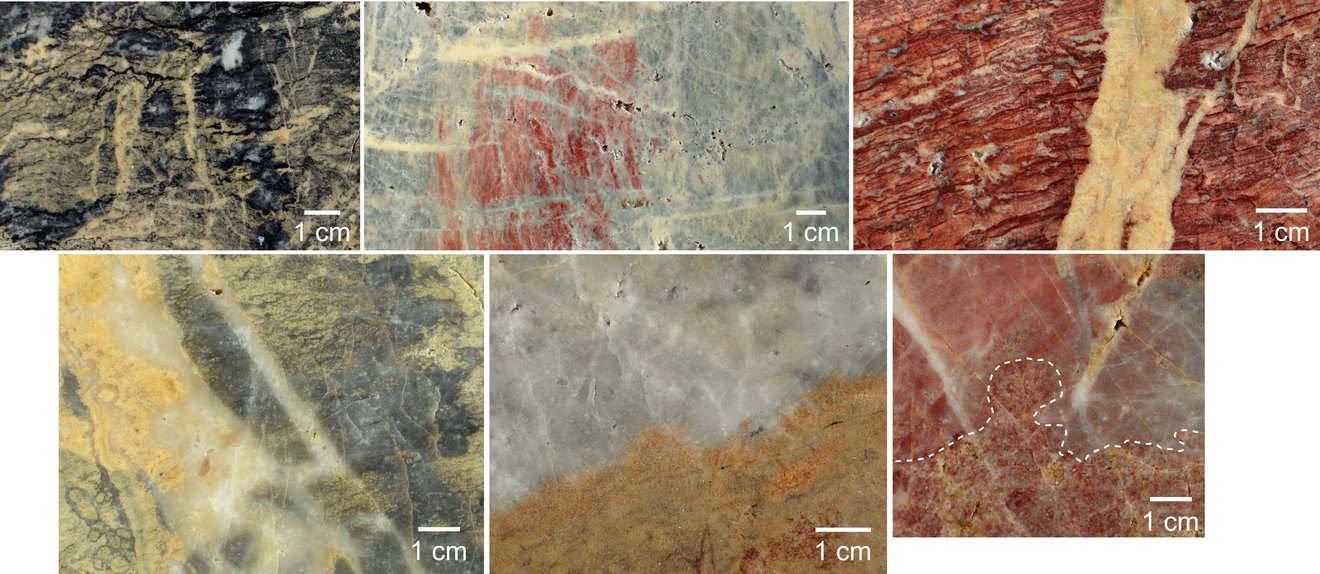
Magnesite is an essential raw material for the refractory industry and therefore of cardinal importance for Europe as an industrial location. Austria has always played a leading role in the research of sparry magnesite. However, despite the long history of research, there is still no consensus on the formation of this type of magnesite and the number of modern publications on Austrian magnesite occurrences is low.
As part of the Horizon Europe project MultiMiner and the project MRI_Magnesit in cooperation with the GeoSphere Austria and RHI Magnesita AG, the magnesite mining district of Hochfilzen (Weißenstein, Bürgl) is being scientifically reprocessed by using modern methods. This district is part of the Tirolic-Noric Nappe System and the magnesite deposits are largely associated with Silurian-Devonian dolostones of the Hochhörndler Complex. The formation of the Hochfilzen magnesite has been controversially discussed in the past.
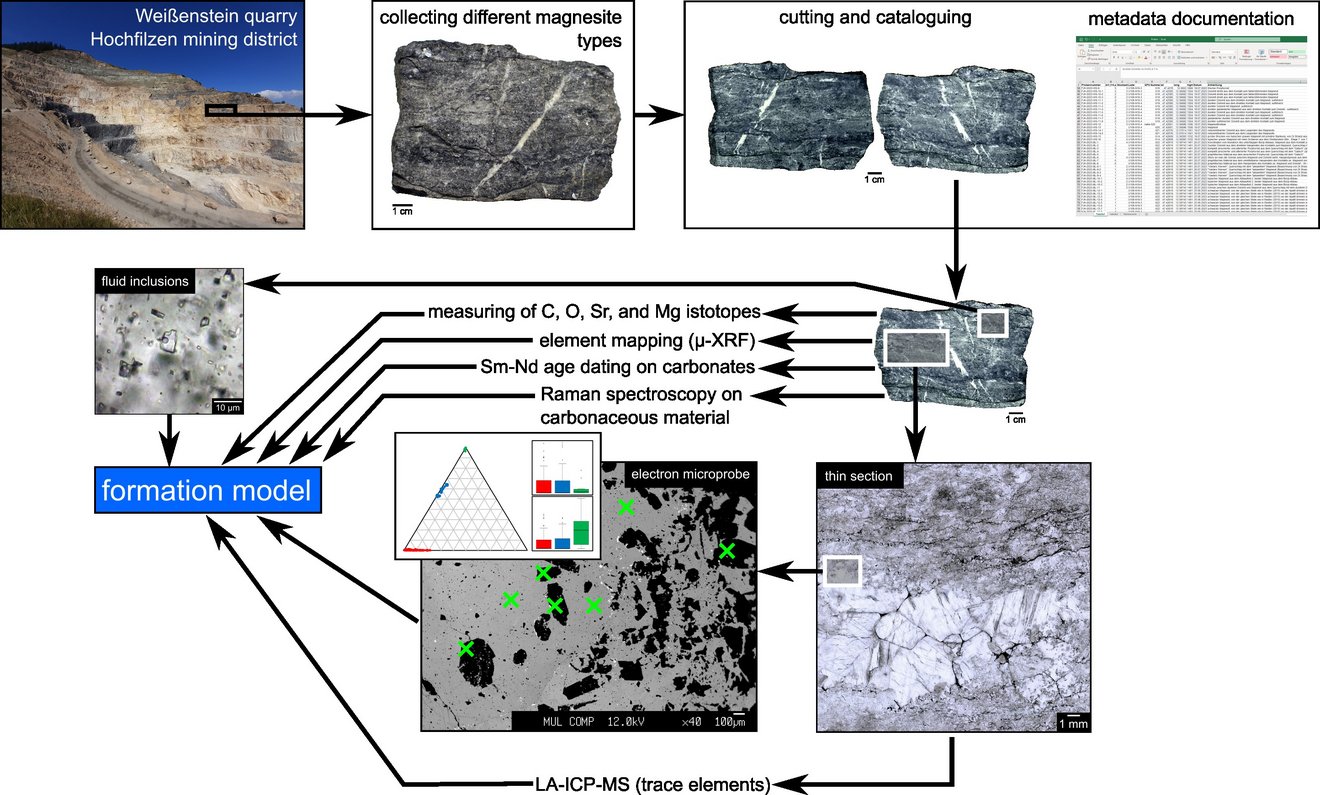
In order to understand the formation of magnesite and to establish a formation model, (1) the age of the magnesite must be determined and (2) the mineralizing fluid must be characterized. A number of analytical methods are used for this purpose: The geochemical information of the main minerals is determined by electron microprobe analyses (major elements) and LA-ICP-MS (trace elements). In addition, the element distribution in hand specimens is mapped (µ-XRF), stable isotopes are measured and carbon-rich material is analyzed by Raman spectroscopy. In order to define the mineralizing fluid, fluid inclusion studies will be carried out and Sm-Nd age dating of carbonates will help to place the magnesite formation in a geodynamic context.